
If your kids love toy trucks, mud and figuring things out, you may have wondered: what is RC crawling? It’s a radio-controlled hobby where drivers guide small, rugged trucks slowly over rocks, logs, ramps and steep hills. There’s no race and no finish-line rush. The goal is to clear each obstacle cleanly, one careful move at a time.
This guide explains the hobby from the ground up: how crawlers work, why families enjoy them together, which skills matter most and how to try it without buying anything. If you live near Hendersonville, Asheville, Charlotte or the Upstate of South Carolina, you’ll also find a family-friendly place to give it a go when the season opens.
Quick Summary
Here’s the short version for busy parents:
- RC crawling is slow, technical driving of radio-controlled trucks over rough terrain, not racing.
- Crawlers use low gearing, high torque and soft, grippy tires to climb obstacles that would stop a regular toy truck.
- RC crawling for kids is great because it rewards patience, planning and teamwork.
- Beginners learn three core skills: throttle control, choosing a line and reading the terrain.
- You can rent before you buy at the Bear Scat Track in Hendersonville, which runs in fall and winter.
What Is RC Crawling?
At its simplest, RC crawling is off-road driving in miniature. A driver holds a handheld transmitter and steers a scale truck across natural or built obstacles. The challenge is control, not speed. Can you climb that boulder without tipping over, or creep across a narrow bridge without sliding off?
Slow, Technical Driving, Not Speed
The first thing most people notice is how slowly crawlers move. A good run looks almost like a nature documentary, with the truck inching forward, pausing and lifting one wheel at a time over a rock.
That slow pace gives drivers time to think, so every bump becomes a small puzzle.
What Makes a Crawler Different
A crawler looks like a toy truck, but it’s built more like a real rock-crawling rig. Most crawlers have low gearing and high torque, so the wheels turn slowly with a lot of pulling power. Soft, sticky tires wrap around rocks and grip uneven surfaces.
Many crawlers also have locked differentials, which make both wheels on an axle turn together. That keeps the truck moving even when one wheel lifts off the ground. Long suspension travel lets the axles twist and flex so the tires stay in contact with the terrain.
You’ll often hear crawlers described by scale. A 1/10 scale truck is one-tenth the size of a full-size vehicle and is a popular choice for outdoor courses. It’s big enough for real rocks and roots but small enough for a kid to carry.
Crawlers vs. Bashers, Racers, and Bouncers
New families often ask about an RC crawler vs. basher. A basher is built for speed, jumps and rough play. A racer is built to go fast on a track. A bouncer is designed to hop and flip with dramatic suspension tricks.
A crawler is built for slow, steady control instead. That matters on a crawler course, where obstacles are designed for careful climbing. Fast, jumping trucks can damage the course, which is why many dedicated courses welcome crawlers only.
Why Kids and Families Enjoy It
RC crawling hits a sweet spot for families. It’s hands-on, it gets everyone outside and it doesn’t depend on who is fastest or strongest. A parent and a kid can stand side by side, each with a truck, and both feel challenged.
A Challenge That Rewards Patience
In crawling, rushing usually leads to a rollover. Kids learn quickly that easing off the throttle and trying again works better than pushing harder.
There’s also a real sense of accomplishment. The first time a kid clears a tricky climb after a few tries, you’ll see it on their face. They figured it out.
Skills Kids Pick Up
Crawling looks like play, and it is. Along the way, kids also practice useful skills:
- Problem-solving: studying an obstacle and testing different approaches.
- Fine motor control: making small, smooth movements with the trigger and wheel.
- Spatial thinking: judging angles, slopes and where each tire will land.
- Resilience: trying again calmly after a truck tips or gets stuck.
Taking Turns as a Spotter
One of the best family parts of crawling is the spotter role. A spotter walks alongside the driver, watches the truck from a different angle and calls out what they see, like “Your front tire is about to slip!”
Taking turns as driver and spotter turns crawling into a team activity. Parents get a natural way to coach without taking over the controls.
Basic Crawling Skills
You don’t need experience to start, but three skills make the biggest difference. These are the foundation of RC crawling for beginners, and they’re easy to practice.
Throttle Control
Throttle control is the most important skill in crawling. The trigger on the transmitter controls speed, and the trick is to use as little of it as possible. Gentle, steady pressure keeps the tires gripping, while too much makes them spin or flips the truck backward on a climb.
Think “slow is smooth, smooth is fast.” If your truck starts to tip, let off the trigger right away. Most rollovers happen because the driver kept pushing.
Choosing a Line
A “line” is the path your truck takes through an obstacle. Before you drive, stop and look. Which rocks are flat enough for a tire? Where could the truck get high-centered, with its belly stuck on a rock and its wheels in the air?
Good drivers often walk the obstacle first, like a hiker scouting a trail. Kids enjoy this part because it feels like detective work.
Reading the Terrain
Reading the terrain means noticing how the surface will behave. Dry rock grips well, while damp wood or loose gravel can be slippery. A steep downhill needs as much care as a steep climb, because the truck can tip forward.
That’s part of what makes RC crawling in the NC mountains fun. Terrain changes with the weather and the season, so the same obstacle can feel different from one visit to the next.
Trying It for the First Time
You don’t need to buy anything to find out if your family likes the hobby. A little planning makes the first visit easy.
Rent Before You Buy
Crawlers range from simple ready-to-run trucks to custom builds, and it can be hard to know where to start. Renting lets your family try the hobby on real terrain before you spend money on equipment. You’ll learn which features matter and whether your kids want to keep going.
Renting also means someone else handles the batteries and setup, so you can focus on driving. Some courses, including the Bear Scat Track, offer rental trucks from Axial, a well-known crawler brand.
Tips for Your First Run
A few simple habits help new drivers enjoy their first time on a course:
- Start on gentle terrain before you try steep climbs.
- Go slow, with small trigger movements and frequent pauses.
- Use a spotter to help you avoid rollovers.
- Read the course rules first, since they keep drivers and trucks safe.
And keep it light. Every crawler driver tips a truck sometimes, and laughing it off is part of the fun.
Where to Try It Near Hendersonville
If you’d like to try the hobby close to home, the Bear Scat Track at Black Bear Snow Tubing is a dedicated RC crawler course near Hendersonville. The family-owned park sits at 373 Kerr Road, an easy drive from Asheville, Charlotte and the Upstate.
The course has 13 obstacles, including a floating bridge, a hill climb and Boulder Mountain. You can use rental crawlers or bring your own crawler, but bashers, racers and bouncers aren’t allowed. The track runs in fall and winter only, following the tubing schedule. Check the park rules for guidelines on who can drive.
Plan a Winter Visit
The park is closed right now and reopens when winter tubing starts in mid-December. When the season opens, RC crawling pairs well with the park’s other winter activities for a full family day.
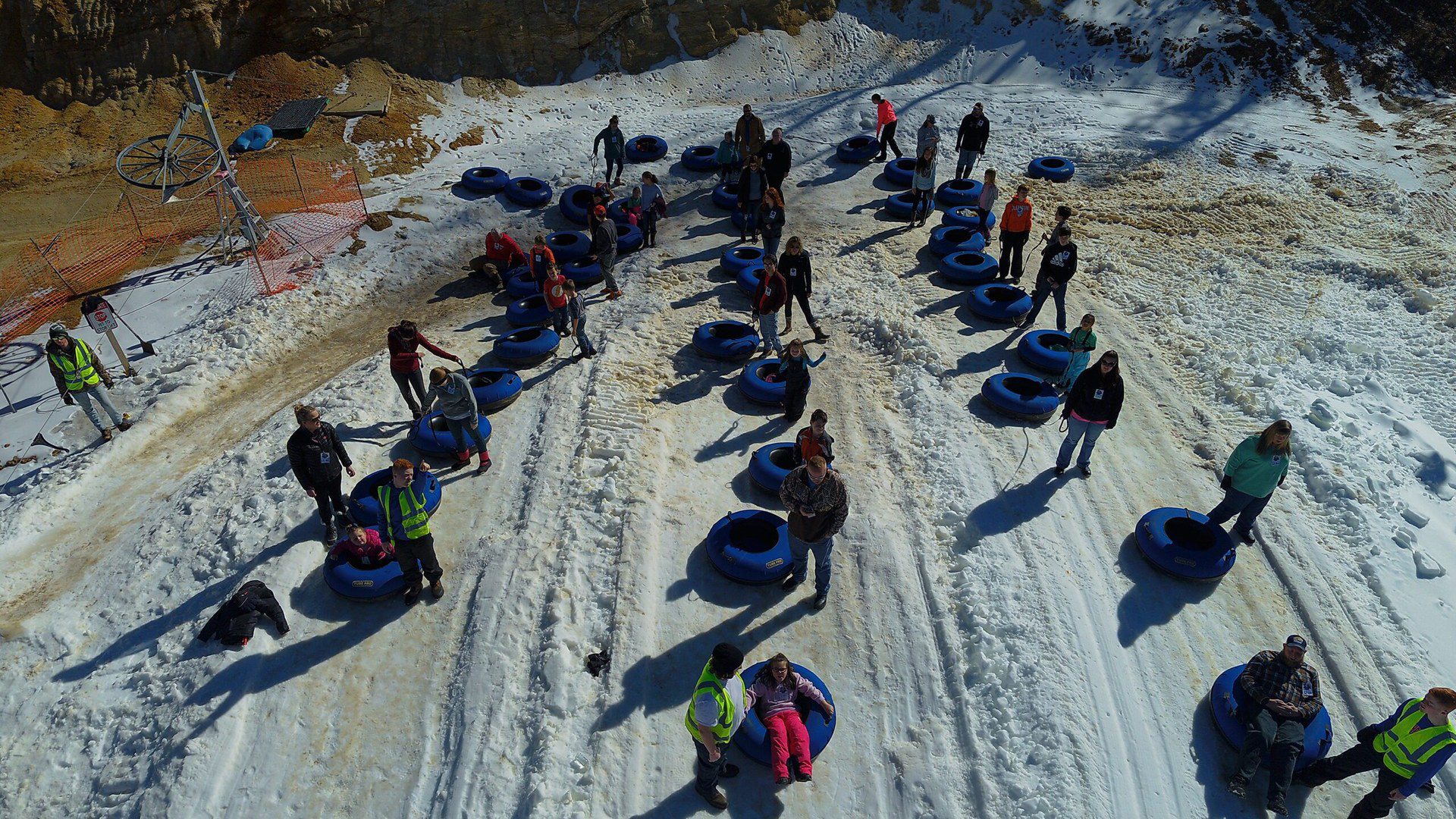
Winter snow tubing runs from mid-December to late February, weather permitting. The slope is more than 600 feet long with an 80-foot drop, and a cable tug lift pulls riders back to the top. You can also ride the scenic mountain hayride to the top of Poplar Mountain.
Between activities, warm up in the heated lodge with hot chocolate, espresso drinks or apple cider donuts, and let kids play on the on-site playground. Because the RC course follows the fall and winter schedule, check the hours of operation before you go. Planning a celebration? See birthday parties and group events, or contact the Black Bear team with questions.
Frequently Asked Questions
What is RC crawling?
RC crawling is a hobby where you drive small radio-controlled trucks slowly over rocks, ramps, logs and hills. The goal is control and careful problem-solving, not speed.
Is RC crawling the same as RC racing?
No. Racing is about speed on a track, while crawling is about slow, technical driving over rough terrain. Crawlers have features like locked differentials and long suspension travel that racers don’t need.
Do I need my own truck?
Not at all. At the Bear Scat Track, rental crawlers are available, or you can bring your own crawler. Only crawlers are allowed on the course.
Is it a good activity for kids?
Yes. Crawling builds patience, problem-solving and teamwork, especially when kids take turns as driver and spotter. For age or size guidelines, see the park rules page.
When can I try it at Black Bear?
The Bear Scat Track runs in fall and winter, following the tubing schedule. The park reopens when winter tubing starts in mid-December, weather permitting.
Conclusion
So, what is RC crawling? It’s a slow, thoughtful hobby that turns rocks and hills into puzzles, and one of the easiest ways for families to play outside together. Kids learn patience and teamwork, and nobody needs to be the fastest to have fun.
When the season opens in mid-December, bring the family to try the Bear Scat Track, then pair it with snow tubing and a hayride, weather permitting. Have questions about rentals, groups or your visit? Contact the Black Bear team and start planning your winter day in the mountains.
